Saturday, 23 July 2016

Tree Blossom

This is one post in a short series in which I look again at spring in Milton Country Park.  So much happens in spring, in such a short space of time, that I found it impossible to keep up with the changing landscape, and, as a result, did not do justice to everything that was going on, the first time around.

 
White blossom on trees in orchard
Orchard - 19 April 2016


The Orchard

One area that I completely neglected was the orchard.  Orchards are, undoubtedly, at their most attractive in spring when the trees are covered in white blossom, like those shown in the image above.

Apple tree in blossom
Orchard - 19 May 2016


I found photographing the apple blossom posed the same problems as I had found with other tree blossom such as the blackthorn. What appears to the naked eye as a substantial and obvious mass of bloom, seems quite insubstantial on the photograph: there seems to be far less flowers than I remembered, and those that are there are individually smaller.  It is then a case of balancing the need to show the overall effect, but still have the blossom large enough to make an impact.  I hope by focussing on a single tree in the image above, I have conveyed a sense of what I saw, while still retaining something of the overall environment.


Apple blossom in close up
Apple Blossom - 8 May 2016

 A close-up highlights the delicate pinks of the buds and developing flowers which is an important feature of apple blossom.

Elsewhere in the Park


Tree laden with white blossom
By Visitor Centre - 8 May 2016
 
This tree, besides the main path leading past the visitor centre, is, perhaps, the most conspicuous and most noticed, in the park. 


Willow tree covered with catkins
Centre of Park - 12 May 2015


Not all blossom is as conspicuous as the white flowers of the fruit trees.  This willow trees shines bright yellow in the sunshine, not from its leaves, but from its catkins.

 
Close up of Field Maple Flowers
Field Maple Flowers - 8 April 2016


Similarly, the flowers of the field maple are easily missed as they are only very slightly different in colour from the surrounding leaves.

Next: Hawthorn


Saturday, 9 July 2016

Green Leaves

When we think of spring, we naturally think of colourful flowers: yellow daffodils and dandelions; white blackthorn and hawthorn; and the pink of freshly opened apple blossom.  These are the eye catching highlights of the season.  

Elder leaves
Young Elder Leaves

At the same time, there is a more lasting change taking place - from bare branches to green leaves.  It is a transition that goes by almost unnoticed; one day the trees are bare, the next, or so it seems, they are covered in leaves.  And, of course, the trees stay green until the following autumn.

For the second year, I have tried to photograph this transition, the mid point between bare wood and leaves, in Milton Country Park.  The main difficulty is capturing that moment when the buds have developed enough to show up green in the photograph, but not so far that only a confluent green mass can be seen.

It was only when I tried to do this last year, that I fully realised that not all trees go green at the same time. The first leaves to appear are those on the elder.  This year this was at the end of February.  The image at the top of this post was actually taken last year in April, which is probably a good indication of the difference in climate of the two years.


Field maple highlight among bare trees
South of Park - 27 March 2016

Another bush that gets its foliage early is the field maple.  This one was in a favoured position on the edge of the woods at the south end of the park.  Its bright green leaves stand out against the surrounding bare trunks and branches.


Veil of hawthorn leaves
By Play Area - 27 March 2016

The field maple in the previous picture was well separated from its background. More usually, the developing leaves are little more than a thin veil over the surrounding wood, clearly visible to the eye but often 'disappear' in a photograph.  This hawthorn is catching the early morning light which helps to accentuate the leaves.


Sticky buds gleam in the sunshine
South of Park - 3 April 2016

Not all buds are so indistinct.  The swelling sticky buds on this young horse chestnut were visible from some yards away.


Large oak tree bright yellow green dominates the path
Centre of Park - 19 April 2016

We tend to think of trees in terms of their colour only when they are in blossom, or, during the autumn.  The rest of the time we appreciate for their stature, form or age.  However, I think they can be impressive when the leaves are just fully formed and are a rich vibrant green.  I have particularly noticed it with oak trees this year.  The foliage of this one really stands out in the sunshine.


Path between bright green hawthorn bushes
By Wetlands - 1 May 2016

The same can also be said of the hawthorn.  Here the hawthorn is in bright contrast to the darker greens of the ivy and the tree trunks.


One for the Future


Young sycamore plant
By Wetlands - 8 April 2016

It does not take much searching to find young sycamore plants like this anywhere in the park.   

Next: Tree Blossom


Saturday, 25 June 2016

Dead Wood

Dead  trees, whether upright, broken down, or rotting on the ground make a significant contribution to both the appearance and the ecology of Milton Country Park.

Two dead tree stumps surrounded by brambles.
By Dickerson's Pit - 13 April 2016

These tall tree stumps, complete with woodpecker holes, are part of a trio of such stumps by the path on the eastern side of Dickerson's pit.  Later in the summer they will be covered in cascades of convolvulus.


Tree stump broken just above ground level with trunk in water
Wetlands - 22 February 2016

More often, the dead stumps do not remain intact and upright, but, like the tree in this image, are broken off by one of the gales which batter the park from time to time.  


Willow tree snapped in two
By Hall's Pond - 13 March 2016

While willow trees like this, snapped in two, are a dramatic testimony to the power of the wind.


Complex of bleached tree roots
Centre of Park - 14 March 2016

At other times, the trees are simply uprooted.  With time, the soil is washed away, leaving a skeleton of roots to bleach in the sun.


Small dead tree on ground bleached white.
Woods at Southern Edge of Park - 3 April 2016

This small tree reminds me very strongly of an animal skeleton.


Moss covered fallen branches
By Todd's Pit - 13 March 2016

Eventually, all the fallen branches will be covered by moss and overgrown by nettles and brambles.  Herb robert is another frequent coloniser of the dead wood in the park.  The logs themselves will provide food and shelter for a host of invertebrates including beetle larvae.


Next: Spring Leaves


Saturday, 11 June 2016

Review 2

This is the second part of my review of a year in Milton Country Park, and looks at autumn and winter.    

Close up of elderberries
Elderberries - 23 August 2015


The Weather


Waterlogged path
Waterlogged Path - 12 January 2016
 
No review of autumn and winter 2015/2016 would be complete without a mention of the weather.   The whole six months of these two seasons could be characterised as very wet and mild: no snow at all, a few light frosts, and a couple of misty days.  This path of puddles sums it all up.

Autumn


Apples strewn across path
Windfall - 20 September 2015

Autumn is generally thought of as the time of fruit: apples, pears, plums, and the red hawthorn berries. However, a lot of fruit, such as the elderberries shown at the top of this post, were ripe before the end of August.  Similarly, the apples were already nearly finished by mid September - the heavy windfall shown above was pictured on the 20th September.

Carpet of yellow maple leaves beneath trees
Autumn Leaves - 2 November 2015

By early November, the park had turned yellow, as is well illustrated by the carpet of leaves beneath the woods beside the A14. 


Reed bed with reed flowers turning to seed
Reeds - 2 November 2015

At the same time, the extensive beds of common reed around the pits had finally flowered and were turning to seed.


Winter

Path enclosed by bare trees
Bare Trees - 8 January 2016

Winter was continuation of autumn.  As usual, for the season,  the trees were bare. 

Line of snowdrops in litter beneath trees
Snowdrops - 16 February 2016


The snowdrops started flowering in December and continued through to March.

Burst of cherry plum blossom in hedge
Cherry Plum Blossom - 2 February 2016

With the mild weather, some spring flowers were exceptionally early, particularly the hazel and cherry plum.  (If I had defined this blog as documenting the year from cherry plum blossom to cherry plum blossom, it would have been six weeks short of a year.) 


Clumps of daffodils besides path
Daffodils - 24 February 2016
By the end of twelve months of photographing in the park,  the daffodils were flowering. 

Where Now?

I have decided to continue this blog for the next few months at least.  At the beginning of this blog, I had no time to do other than react to the changes in the park with little time to reflect on what was happening. This is something I felt most acutely during spring, when I almost failed to record the elderflower at all.  

Similarly, there are aspects of the park which are not time dependent.  An example are the dead and broken trees.  These, with their moss covered branches on the ground, are an important part of the ecology of the park, but which change little during the year.  My next post will be concerned with this subject.

Next: Dead Wood 

Saturday, 28 May 2016

Review

View of Todd's Pit from Visitor Centre
Todd's Pit - 15 September 2015


I have now documented Milton Country Park for just over a year. I started taking pictures of golden reeds in wintry sunshine in February 2015, and ended photographing frost etched vegetation in March 2016. After thirty nine posts, and over 200 images, it is time to look back over the last fourteen months.


This review of the year is organised in four sections which are roughly based on the perception of the seasons. One thing that this project has taught me is that the natural world does not neatly parcel itself up according to man-made divisions. These sections have fuzzy boundaries and their time frames overlap each other. For instance, I have included fruit in the autumn section even though a lot of it was ripe in August, when there was still a lot of summer flowers around.


I have split this review into two parts: in this post, spring and summer; in my next post, autumn and winter.


Spring


Cherry Plum Blossom
Cherry Plum Blossom - 23 March 2015


The main feature of spring was the successive waves of white tree blossom which engulfed the park. It started with the cherry plum and blackthorn, followed by apple, hawthorn, and elderflower. Herbaceous plants also contributed to the whitening of the park.  In particular, cow parsley at the northern end of the park; and jack-by-the-hedge and  comfrey in and around the woods at the southern extremity.  This is a time of rapid change.  None of the tree blossom lasted more than a week or two; and, at the same time, as the leaves came out on the trees, the park was transformed from brown to green in a matter of weeks.


Hawthorn bush in front of massed hawthorn blossom
Hawthorn Blossom - 20 May 2015


Summer


Yellow Irises - 26 May 2015

Summer is the time for summer flowers. It started with the yellow irises blossoming around the margins of the water and ended with the blooming of bulrushes and the reeds. At the start of the summer, rosebay willow herb made a prominent display on the banks of the 13th Public Drain alongside Remembrance Meadow. Later, as the yellow irises faded, their place at the water's edge was taken by purple loosestrife.  Other noticeable flowers included ragwort around the children's play area, the large white flowers of convolulus, and the purple water mint.  But there were also some big surprises, including a patch of poppies on the access road, and a single white orchid.

Rosebay Willow Herb - 30 June 2015
Next: Review 2


Saturday, 14 May 2016

Past Glories

It is now thirteen months since I started this blog, and have now published photographs of Milton Country Park throughout one full year. Before the start of this project, I had occasionally taken photographs in the park, but not on any systematic basis. I thought it would be a good idea to look back at some of these previous images and what had caught my eye.

Snow and Ice


Gulls standing on frozen pit with rime covered trees
Dickerson's Pit - 7 December 2010

The most notable feature of the year just gone was the complete lack of snow and ice. Such weather transforms the landscape and sends everyone, including myself, searching for their cameras to capture often magical scenes. This first image was taken in December 2010. A beautiful frosty scene with the ducks and gulls confined to a small area of clear water against a backdrop of trees glistening white with rime. A real contrast to the virtually identical picture from this winter which I published in my last post.
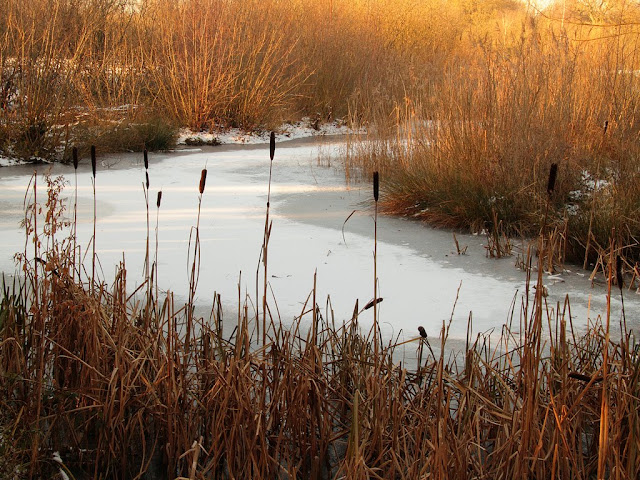

Ice covered with snow surrounded by golden reeds and bulrushes
Dickerson's Pit - 25 December 2010

A few days later and the snow came. This is the closest I have ever come to experiencing a white Christmas. On the day itself, the remains of previous snow falls are still lying on top of the ice surrounded by the flaming orange of reeds and willow bushes catching the winter sun.

After this last warm wet winter it is hard to imagine such scenes, and wonder if, with global warming, we shall see ever them again.


Toadstools
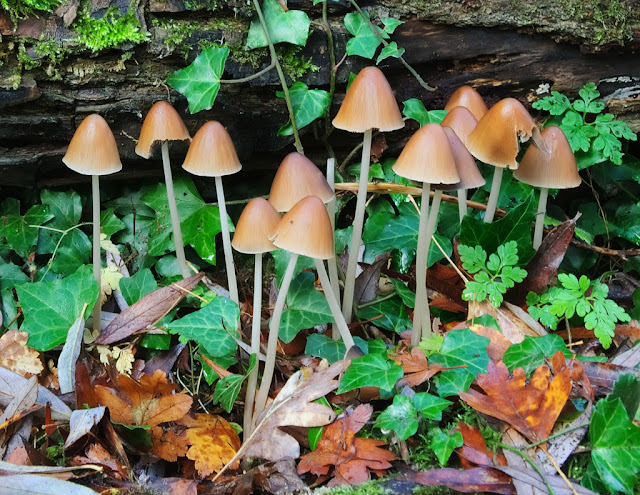


Toadstools and ivy growing at base of log
By Hall's Pond - 10 November 2011

A number of other things turned up in these old pictures that either were not there in the past twelve months or I simply missed them. One such absentee was fungi. In July 2011, I found these toadstools growing at the base of one of the many fallen logs in the park. I am reasonably certain that these were not there this last year as I am interested in the plant communities that grow in these place, and was always on the look out for the opportunity for capturing intimate landscapes of the flora.


Hall's Pond - 9 January 2007

Previously, in 2007, I had captured this fine specimen on the willow trees by Hall's Pond. In this case, I cannot be anything like so certain that I simply did not see them.


Loosestrife - Purple and Yellow
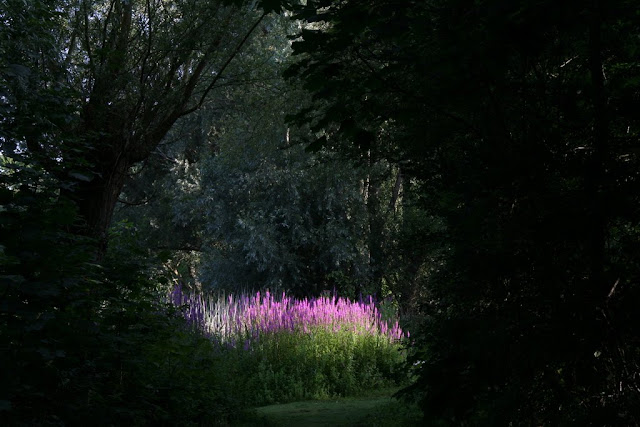
 

Stand of purple loosestrife catching the light
Hall's Pond - 31 July 2007


Plants come and go. Some of the variations in flora are simple annual fluctuations reflecting to the differences in weather between one year and the next. Other changes are more permanent, as one species becomes dominant and edges out other plants in the immediate area. This is probably the case with this stand of purple loosestrife on the east bank of Hall's Pond. There is still a lot of loosestrife in the park, and still some around Hall's Pond, but this particular clump has been overgrown with reeds.
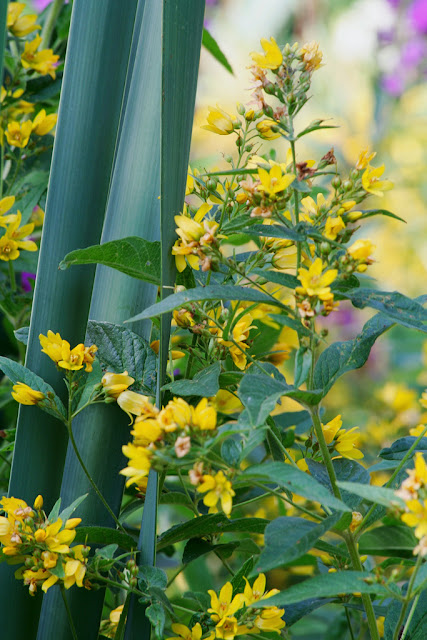

Yellow loosestrife growing among reeds
Dickerson's Pit - 24 July 2007
In another area, purple loosetrife has edged out the yellow loosestrife that what growing there in 2006. I was never entirely happy with this picture, but will have to be satisfied as the yellow loosestrife appears to have gone for ever, replaced by its purple cousin and meadow sweet.

Next: Review

Saturday, 23 April 2016

Winter Weather

What winter weather? 


Frosted picnic bench
Play Area - 21 January 2016

The winter of 2015 / 2016 was one of the mildest winters on record. Winter weather in Milton Country Park was confined to a few light frosts, all of which had disappeared by mid morning. No snow at all. With that in mind, you will understand why I left this post to the very end, and it will be one of the shortest posts in the project so far.


This first picture is a fair summary of the winter: sufficient frost to turn the grass a lighter shade of green, a table well covered in rime, and almost nothing on the trees. It is somewhat ironic, that in one of the dampest winters, there was never a freezing fog to coat the trees in sparkling ice.


Gulls standing on ice around clear water
Dickerson's Pit - 19 January 2016

A couple of mornings were cold enough to partially freeze the water in the pits and leave the gulls standing on the ice around a small patch of clear water. A sort of bird's swimming pool.


Leaves with ice crystals around the edges
Remembrance Meadow -  6 March 2016

Finally, the ground vegetation did get etched with ice crystals. I particularly liked the pattern here.


As I said, a short post.


My next post will be looking at some pictures of the country park before I started this project. Included will be a couple of images of a real winter with snow on the ground and ice on the trees.

Next: Past Glories